
Updated November 2026 · Written and reviewed by Dr. Nicole Crippen Schremp, PT, DPT, PCS, Board-Certified Pediatric Clinical Specialist
The short answer: Mini-milestones are the small skills between the big ones: pivoting on the tummy, getting knees under hips, rocking on all fours, planking and reaching on hands and knees. Each builds the strength and balance for crawling. Watching for them shows your baby is progressing, even before the big milestone shows up.
Baby milestones like rolling, sitting, or walking are made up of smaller developmental steps, often called mini-milestones. These early motor skills help your baby build the strength, coordination, and confidence needed for major milestones, especially crawling.
Let’s take a closer look at one major milestone: hands-and-knees crawling, also known as creeping.
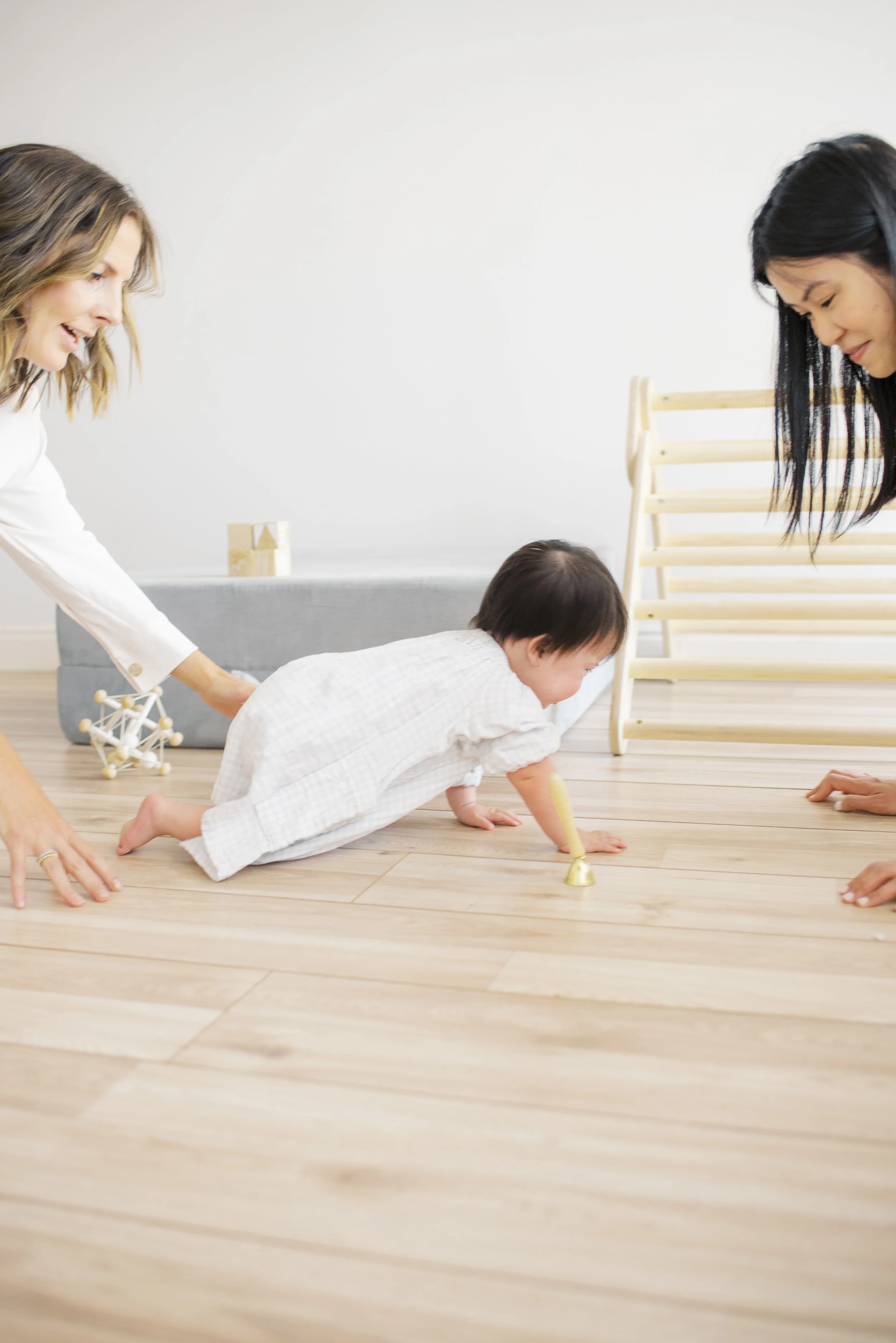
Creeping is a huge step in your baby’s movement journey! It boosts strength, cross-body coordination, balance, and body awareness: all essential for future mobility and brain development.
While every baby moves at their own pace (and may follow a slightly different sequence), here are key developmental markers that often lead to hands-and-knees crawling:
Tummy Time: The First Step Toward Crawling
Tummy time lays the foundation for creeping. As your baby lifts their head and pushes up on their forearms or hands, they build strength in the neck, shoulders, arms, and back. It also supports visual tracking, head control, and early coordination.
Knees Under Hips: A Pre-Crawling Milestone
You may notice your baby beginning to pull their knees underneath their body, with their hips lifted in the air. This movement shows growing hip and core strength and flexibility, and it’s a crucial step toward getting into hands-and-knees position.
Baby Pivoting: Early Crawling Coordination
Babies often begin turning in circles on their bellies to reach toys. This pivoting develops core strength, weight-shifting, and early cross-body coordination: all vital skills for crawling. Plus, it’s a fun way for them to explore!
Rocking on All Fours: Core Prep for Crawling
Once babies reach the hands-and-knees position, they begin to rock forward and back. This movement builds stability in the shoulders, hips, and core, and helps them learn to balance while shifting weight, a key component of crawling.
Baby Plank Position: Strength for Crawling
Some babies briefly push up onto their hands and toes like a plank. While it may not last long, this movement builds full-body strength and improves coordination, balance, and spatial awareness.
Reaching on All Fours: Building Stability
As your baby becomes more stable on hands and knees, they begin reaching for toys. This challenges their core and upper body strength while encouraging weight shifting and stability.
Army Crawling: Baby’s First Independent Movement
Many babies begin by moving forward with their bellies on the floor, using their arms to pull and push. This early form of crawling develops upper body strength, encourages exploration, and gives your baby a taste of independence!
Sources
By around 8 months, babies often start pushing into a full hands-and-knees crawl, using coordinated arm and leg movements. This transition supports brain development, body awareness, and future movement milestones like pulling to stand and walking.
Examples of Mini-Milestones That Build Major Skills
Rolling (belly to back)
Lifting and turning the head during tummy time
Propping on forearms
Reaching for toys while on the belly
Sitting
Pulling to sit without head lag
Sitting with hands propped in front (tripod sit)
Bringing hands to feet while the baby is lying on their back
Maintaining a straight back with support
Hands-and-Knees Crawling (Creeping)
Pushing backward while on the belly
Bringing knees under hips
Reaching on hands and knees
Pivoting in tummy time
Rocking on hands and knees
Walking
Supporting weight on both legs with independent standing
Bouncing while supported and mini-squats
Sit to stands
Cruising along furniture
Taking assisted or independent steps
Why Mini-Milestones Matter for Strength, Balance & Brain Development
Mini-milestones help your baby:
Build critical muscle strength and postural control
Develop symmetry and balance
Gain motor planning skills needed for coordinated movement
Create important neural connections that support brain development
They also help parents and providers identify asymmetry or delays, early on. When support makes the greatest impact.
What if my baby is taking longer to crawl?
Every baby develops in their own time. What matters most is giving them space, opportunities, and support to build strong foundations for movement. These mini-milestones form critical neural connections, support motor planning, and help your baby feel confident in their body. If you notice asymmetrical movement patterns or delayed milestones, consider connecting with a pediatric physical therapist for early support and guidance.
We’re Here to Support You
At Movevery, we specialize in supporting babies through individualized, holistic care that helps them gain confidence in their movement and meet milestones to help them thrive. Contact us here to learn more or schedule a consultation.
