
Why Movement Matters in Early Childhood Classrooms: Building Strong Foundations Through Play
Early Milestones & Movement in Childcare Settings
In infant and toddler classrooms, every moment is an opportunity to support development — from diaper changes to floor play to transitions between activities. Movement is not just a milestone; it’s the foundation of how children learn, regulate their emotions, and build lifelong motor skills. For childcare professionals, understanding how movement develops helps create safer, more intentional environments where every child can thrive.
Drawing from pediatric physical therapist Dr. Nicole’s “Why Movement Matters” framework, here’s how early childhood educators can support strong movement foundations in your classroom.
The Role of Movement in Early Learning
Babies are naturally wired to move — and movement is how they make sense of the world. During the first months of life, brain pathways grow rapidly, driven largely by physical exploration and sensory experience. If babies aren’t moving, they aren’t “lazy”. We should ask why.
In the classroom, this means:
Every reach, roll, wiggle, and push is part of learning
Sensory-rich movement experiences support early brain development
Balanced vestibular (movement) and proprioceptive (body awareness) input helps regulate babies throughout the day
Even short moments on the floor contribute to big developmental gains.
Stability Before Mobility: What Educators Should Know
Motor development follows a predictable progression. In group care settings, understanding this order helps educators recognize where each child is developmentally — and how to support their next step.
Development moves from:
Back play → Rolling
Static sitting → Moving into and out of sitting
Rocking on hands and knees → Crawling
Supported standing → Walking
ECE Tip:
Provide varied, safe floor spaces where infants can explore these stages at their own pace — without being propped into positions they’re not ready for.
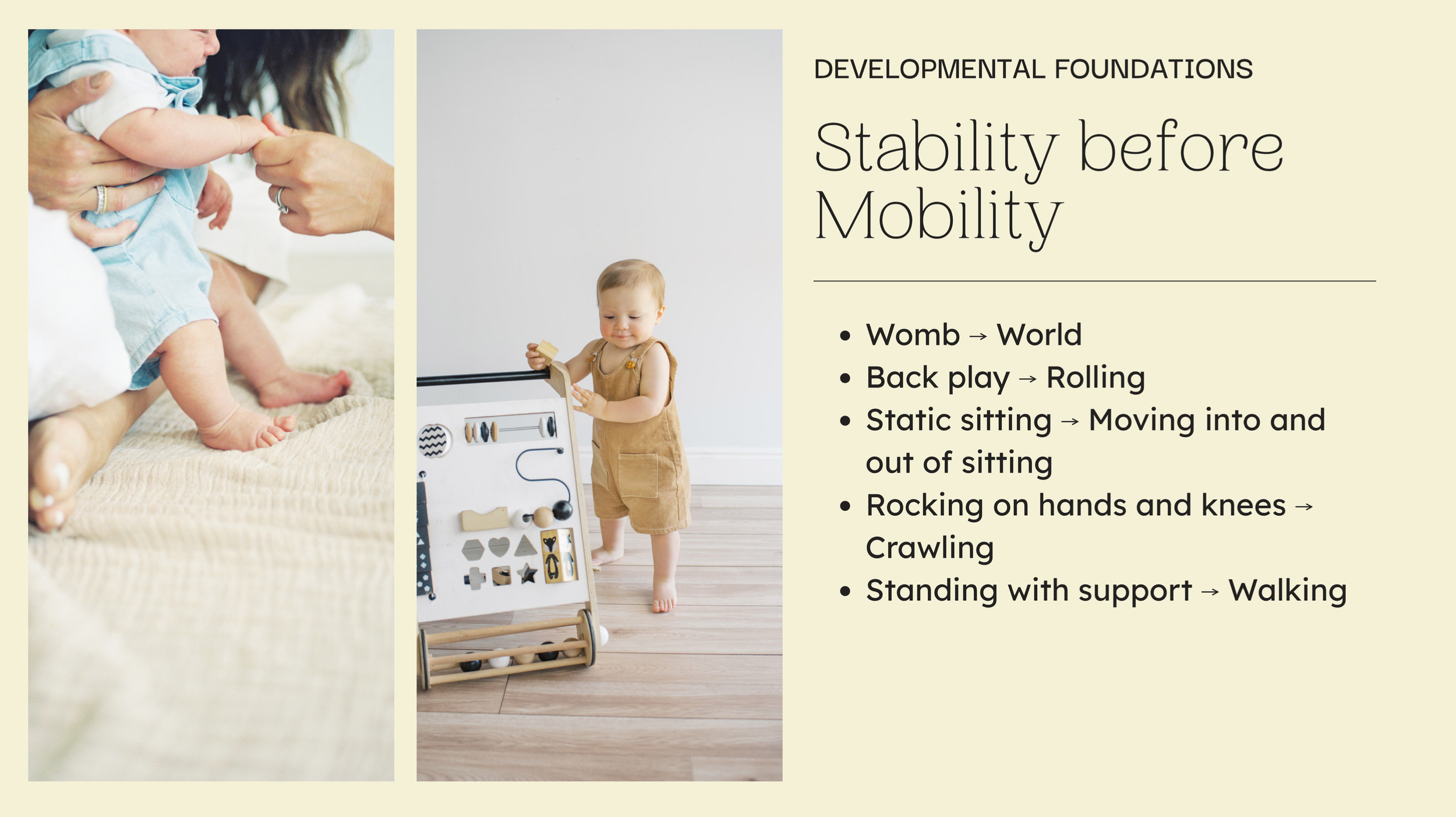
Motor development follows a predictable progression. Understanding these stages helps early childhood educators identify each child’s skills and provide the right support in group care settings.
The Power of Play in Infant Classrooms
Play is learning, especially for infants. Different play positions help babies build different strength and coordination patterns:
Back play encourages visual tracking and core activation
Side-lying helps with symmetry and midline awareness
Tummy time builds head and neck control
Short, frequent opportunities throughout the day help each child build readiness for more complex movements.
Why Crawling and Transitions Really Matter
Crawling on hands and knees builds essential skills needed for later academic and physical success.
Crawling on hands and knees supports:
Core and shoulder strength
Bilateral coordination
Hand-eye tracking
Body awareness
Foundational skills for writing, dressing, and reading
Transitions — such as rolling or getting into sitting — are equally important. They build strength, coordination, and problem-solving abilities.
ECE Tip:
Give babies space and time to move into and out of positions independently. Avoid overusing devices that hold them still.
Recognizing When a Baby May Need More Support
Educators play a crucial role in early identification. Signs to watch for include:
Difficulty tolerating tummy time
Always looking to one side
Difficulty rolling or delayed sitting
Stiff or rigid movement patterns
Persistent delays in transitions
Sharing observations with families early can make a long-term difference.
Supporting Symmetry and Preventing Torticollis in Group Care
Torticollis, or head-tilt preference, can impact feeding, digestion, posture, and early motor skills. It is often noticeable in classroom routines.
Ways educators can help:
Alternate sides for feeding and holding
Offer short, playful tummy time throughout the day
Limit time in “containers” like swings, bouncers, or car seats
Small daily adjustments support better alignment and movement freedom.
Seating and Container Use in Childcare Settings
Seating Choices
Better options for seated play include:
Sit-Me-Up – offers stability with less trunk rotation
Laundry basket sitting – playful, encourages core activation
Avoid Overuse of Activity Tables & Jumpers
If used at all:
Wait until at least 6 months
Keep feet flat on the floor
Limit to 10–15 minutes at a time
Always balance with floor play
Creating Movement-Rich Environments in Childcare Settings
Here are simple ways to incorporate healthy movement into your daily routine:
1. Prioritize Floor Time
Set up soft, safe spaces where babies can explore freely.
2. Rotate Positions Frequently
During play, diaper changes, and routines, vary their movements and perspectives.
3. Encourage Natural Transitions
Let infants move into sitting or standing on their own instead of placing them in those positions.
4. Offer Sensory-Rich Play
Rocking, gentle swaying, pushing, pulling — these help regulate and prepare babies for learning.
5. Provide Warm-Up Routines
Opening and closing arms
“I’m so big!” overhead arm stretch
Hands-to-knees rocking
Opposite-hand-to-knee tapping
These help infants prepare for active play.
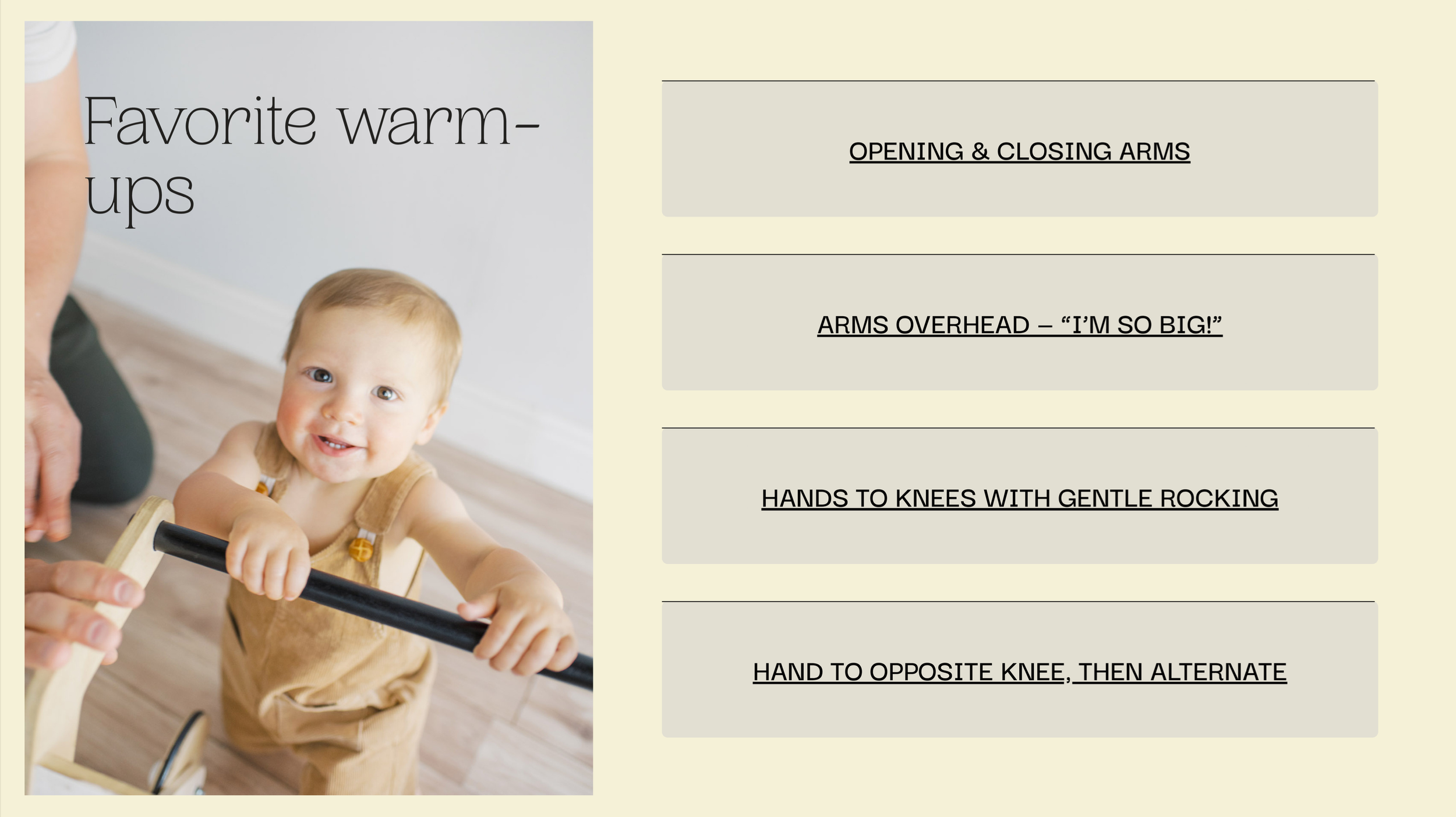
Promote infant motor readiness with warm-up routines including arm opening, overhead stretches, hands-to-knees rocking, and opposite-hand-to-knee tapping — perfect for childcare and early learning settings.
Key Takeaways for Early Childhood Educators
Every change in a child’s position supports brain and body development
Crawling, rolling, and transitions are just as important as walking
Free movement builds lifelong strength, confidence, and coordination
Early identification makes a meaningful difference
Your classroom environment has a powerful impact on motor development
Early childhood educators can boost motor development by encouraging position changes, crawling, rolling, and transitions, promoting free movement, identifying delays early, and creating classrooms that support strong physical growth.
