
Movevery Milestone Guide: 1–5 Year Milestones Through a Pediatric PT Lens
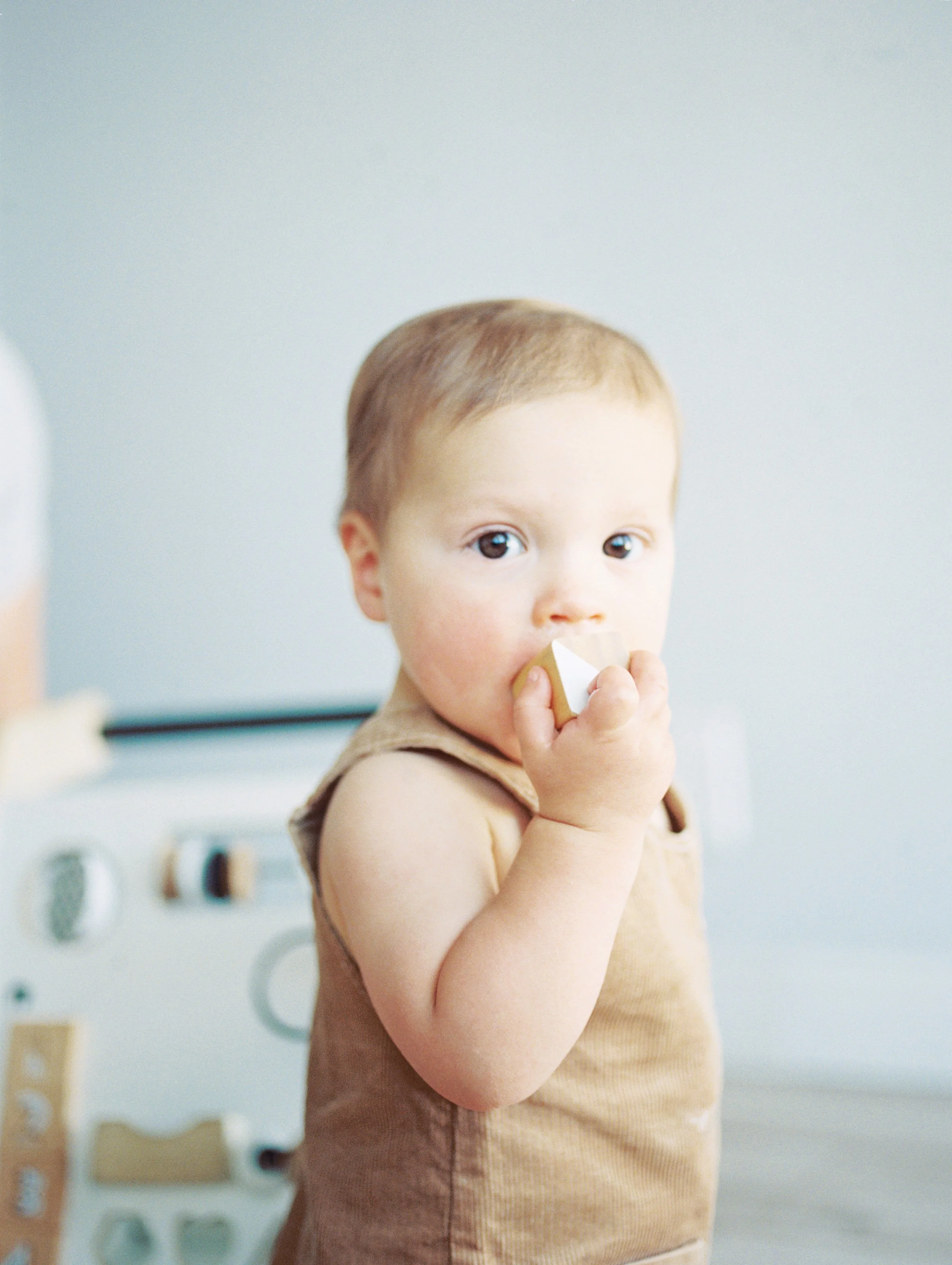
A year-by-year guide for parents, backed by play-based strategies and movement science.
It’s important throughout development to give babies and children space for play without constant direction. In the earliest months, this might look like floor time where your baby can kick, stretch, and look around freely. These little moments help their body and brain practice problem-solving, build new connections, and develop focus.
As babies grow into toddlers and beyond, independent play continues to support resilience, creativity, and self-confidence. Allowing children time to play without constant guidance lays the foundation for imagination, curiosity, and a love of learning.
Age 1–2 Years: Building Balance, Strength & Early Coordination (12–24 Months)
Download the Toddler Milestone Guide (Ages 1–2 Now)
What Movement Looks Like This Year
Between 12–24 months, little ones experience major gains in balance, early coordination, and confidence. In general:
Early walkers begin standing independently, taking first steps, and practicing squats to pick up toys (12–16 months)
They progress into running, kicking, throwing, and climbing onto furniture (16–24 months)
These skills help toddlers explore their environment safely and with increasing independence.

From first steps to playful climbing, children ages 12–16 months rapidly develop balance and early coordination. Learn what typical movement looks like during this exciting year.
Parent Q&A
Q: Should my 1-year-old be walking yet?
A: Not necessarily. Walking independently between 9–18 months can be typical. What matters most is seeing progress towards wlking: pulling to stand, cruising, and attempts at stepping for example.
Q: My toddler “w-sits.” Should I discourage this?
A: Usually, yes. W-sitting (legs out to the side in a “W” shape) isn’t always a problem, but if it’s the baby or child’s go-to position, it’s worth paying attention. W-sitting can be a sign that the baby is avoiding using core and trunk muscles and seeking stability. Over time, this may impact balance, hip development, coordination, and progression through other milestones. Try encouraging “criss-cross” sitting, or presenting toys to the side to transition to side-sitting, or higher on a surface like a couch to encourage tall kneeling.
Q: How can I support early walking at home?
A:
Place toys on the floor while your baby is standing at furniture to encourage squatting and standing back up.
Add weight to push walkers for controlled walking practice.
Encourage standing with your child’s back to the couch with their hands free.
Age 2–3 Years: Coordination, Running & Early Jumping Skills
Support Your Toddler’s Growth — Download the 2–3 Year Milestone Guide
What Movement Looks Like This Year
Between 24–36 months, toddlers shift from “toddling” to true athletic learners. Milestones include:
Standing on one foot, running well, and walking backward
Throwing and catching a playground ball
Jumping forward and jumping off steps
Pedaling a tricycle and climbing playground equipment
This year brings a stronger balance and more intentional whole-body movement.
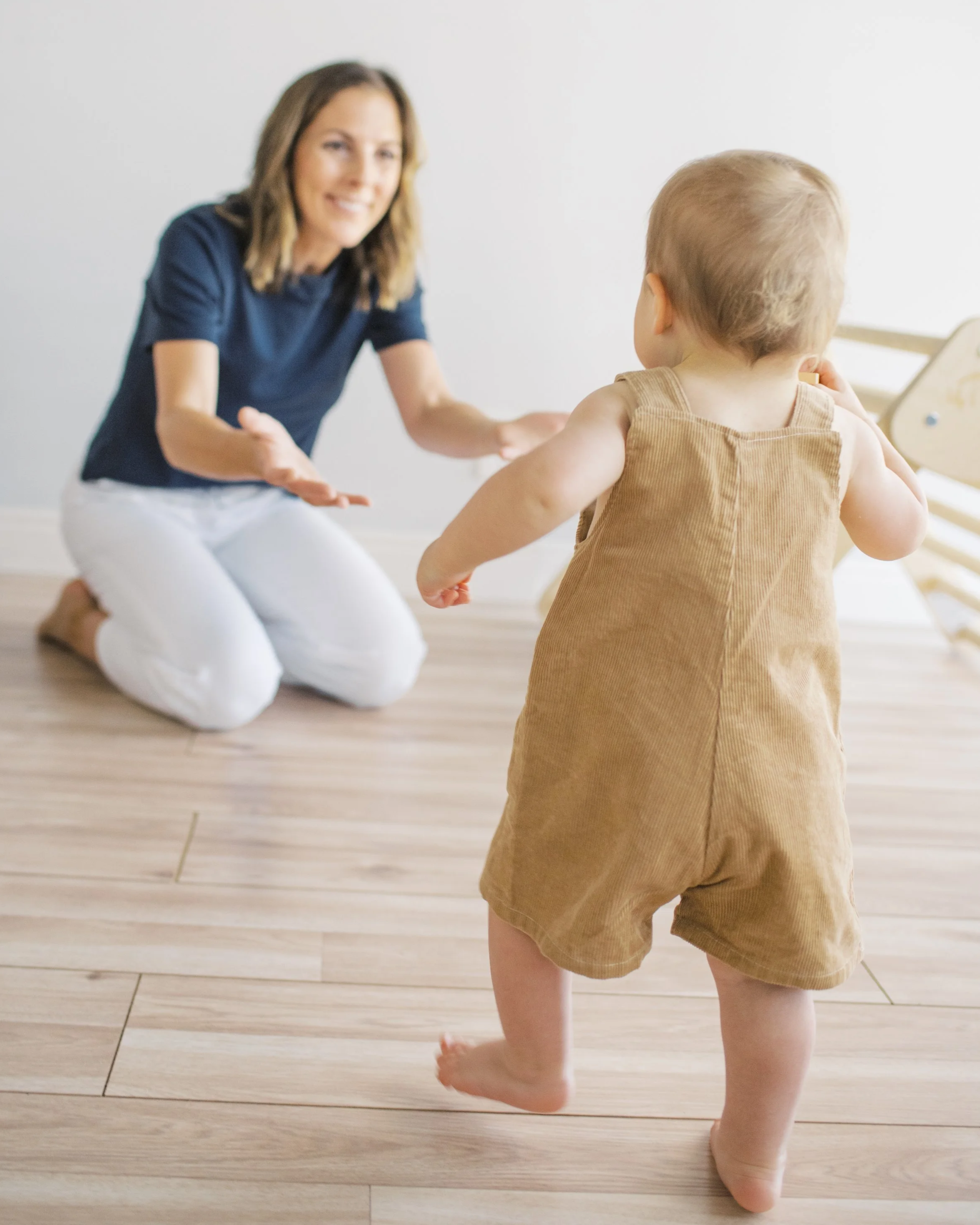
Between 24–36 months, toddlers move from early walking to athletic skills—standing on one foot, running, walking backward, jumping, throwing, catching, and climbing with growing confidence.
Parent Q&A
Q: My child can’t stand on one foot yet. Is that OK?
A: At this age, many toddlers can hold 1–5 seconds. If balance is tricky, try “foot high-fives” or tree pose practice (support strategies on p.5 of 2-3 year guide).
Q: How do I encourage safe climbing?
A: Provide supervised chances on toddler-sized play structures. Encourage climbing up and down, not jumping off high surfaces.
Q: Is running uneven or uncoordinated normal?
A: It depends. Running does smooth out as strength and core control improve; however, if you find your child having trouble with this, it could be worth discussing with your pediatrician or a pediatric physical therapist.
Age 3–4 Years: Hopping, Galloping & Advanced Balance Skills
Download the Preschool Milestone Guide (Ages 3–4)
What Movement Looks Like This Year
Movement becomes rhythmical and playful. According to the 36–48 month milestones:
Children begin galloping, standing on one foot, and tiptoe standing
They hop 5–8 times, jump 2–3 feet, and alternate feet on stairs
Catching progresses from playground balls to tennis balls
Play becomes more imaginative, making this a great time for movement-based pretend play.
Parent Q&A
Q: My child still prefers stairs one step at a time. Should I worry?
A: Many 3-year-olds still use support or one-step patterns. Introduce railing-assisted alternating feet (support strategies, p.5 of 3-4 year guide).
Q: How do I teach hopping?
A: Use animal play — bunny hops and frog jumps — to practice one- and two-foot jumping (support tips, p.5 of 3-4 year guide).
Q: What about ball skills?
A: Start with a large soft ball at close range, then progress to smaller balls and longer distances.
Age 5 Years: Coordination, Rhythm & Early Athletic Skills
Support Your Preschooler’s Growth — Download the 5 Year Milestone Guide
What Movement Looks Like This Year
By age 5, movement becomes smoother and more coordinated. According to the milestone document:
Children skip with rhythm, balance 10 seconds on each foot, and jump/turn 180°
They hop forward 1–2 feet and show improved bilateral coordination
These skills support confidence in early sports, dance, and playground activities.
Parent Q&A
Q: Should my 5-year-old skip easily?
A: Skipping often emerges closer to age 5½ and requires rhythm + coordination. Practice with music or movement songs (support tips, p.4 of 5 year guide)
Q: My child falls often. Is that still normal at 5?
A: Some tripping is normal, but persistent falling or difficulty with stairs, jumping, or balancing warrants a motor screening.
Q: How do I build confidence in gross motor play?
A: Celebrate effort, not performance — “I love how you tried that hop!” This age thrives on positive reinforcement.
You’re doing an amazing job — and you’re not alone on this journey!
Thank you for taking the time to learn more about your child’s development. If you feel your little one could use extra support—or if you’d simply like some guidance as they grow—I’m here to help.
Simply request a consultation below, and I’ll send over a few times that work. I look forward to connecting with you and supporting your child’s journey.
Disclaimer:
This guide is intended for developmental surveillance and educational purposes only. It is not a diagnostic or medical tool and does not replace individualized evaluation or medical advice. Every child develops at their own pace, and variation within milestone ranges is normal.
If you have concerns about your child’s development or progress, please consult a qualified pediatric physical therapist or healthcare provider.
