
Parent Q&A: Baby Development Milestones from Newborn to 6 Months

Parent Q&A: Infant Development Milestones & Baby Growth From Newborn to First Steps
Question: What should parents know about milestones in the first year?
Answer: Baby milestones are guideposts, not deadlines. Every infant develops at their own pace, and mini-milestones are just as important as the big ones, like rolling, sitting, crawling, and walking. At Movevery Pediatric Physical Therapy, Dr. Nicole provides hands-on, holistic support to help parents nurture early baby development stages, gross motor skills, and confidence through play and movement.
Section 1: Early Development & Brain Growth
Question: What is my baby learning in the earliest months?
Answer: From day one, babies are building brain pathways through every cuddle, kick, and coo. These early experiences support attention, memory, and social-emotional development.
Question: Why do babies like to be walked?
Answer: Rhythmic movement soothes the vestibular system (the balance center in the inner ear) and helps babies feel calm. Gentle movement supports early sensory development and sleep patterns.
Question: How can I support early brain development?
Answer: Tummy time, side play, back play, chest to chest, reading aloud, responding to cries, and face-to-face play all nurture brain growth and connection.
Dr. Nicole: “Every smile, cuddle, and playful moment is wiring your baby’s brain for learning.”
Section 2: Milestones Month by Month
Newborn (Birth – 10 Days)
Question: What movements should I expect in a newborn?
Answer: Movements are mostly reflexive and floppy as your baby adjusts to life outside the womb.
Head & Neck Strength: Early muscles work to lift and steady the head.
Reflexes: Rooting reflex, for example, helps babies find the breast or bottle.
Senses & Bonding: Gentle rocking, holding, and high-contrast visuals support vestibular input and trust.
Month 1
Question: How do my baby’s movements change after the first month?
Answer: Movements become more purposeful:
More alert, visually connecting with you and their surroundings.
Head turning is more controlled.
Kicking patterns strengthen hips and core.
Arms and hands begin coordinated movement.
Early tracking and visual guidance.
Month 2
Question: What should I notice at 2 months?
Answer: Stronger head control, social smiles, and early body awareness. Hands may begin opening, and brief toy swipes encourage exploration.
More wiggly, less tight: Movements are looser and a bit disorganized as flexion tone decreases; babies are still building strength for true antigravity control.
Vision leads the way: Babies use their eyes to guide head movements, briefly focus in the middle, and start tracking toys side to side; using both eyes together is just beginning.
Head control is key: Neck muscles are still developing, so turning is easiest to one side (often showing the ATNR reflex), with short head lifts in sitting or tummy time.
Body awareness grows: Kicking both legs or touching their feet helps babies learn where their body is in space and decreases foot sensitivity.
Early play: Hands begin to open with arm extension, allowing swipes at toys or holding a rattle, though play isn’t yet purposeful.
Month 3
Question: How can I support midline control and coordination?
Answer: By three months, your baby is learning to find and maintain midline—bringing their head, hands, and body toward the center. This is more established during month 4. This is a key milestone that helps both sides of the body learn to work together, builds coordination, and supports later skills like rolling, sitting, and reaching.
How You Can Help
Encourage hands to midline: Place lightweight toys or your fingers near the center of your baby’s chest to invite them to bring their hands together. This helps strengthen shoulder and chest muscles while improving coordination between both sides of the body.
Offer side-lying play: Gently position your baby on each side throughout the day. This builds balance between flexor and extensor muscles, shapes the rib cage, and gives new sensory input to the side of the body that’s against the surface.
Support head control: Alternate positions like tummy time, supported sitting, and chest-to-chest play to help your baby learn to hold their head in midline. Use your voice or face as a visual cue to help them find center.
Encourage visual focus: Slowly move toys or your face from side to side, giving your baby time to track across midline. This strengthens eye muscles and improves coordination between eye, head, and body movement.
Include feet play: When your baby brings their feet together or to their mouth, they’re discovering the lower half of their body. Let them explore freely—this helps integrate core muscles and body awareness.
Why It Matters
Midline play connects your baby’s vision, balance, and body awareness systems. Every time they bring their hands or feet together, or turn their head toward the middle, or hold a teether, they’re building symmetry, stability, and control—the foundation for rolling, sitting, crawling, and beyond.
Month 4
Question: What changes occur around four months?
Answer: Controlled, purposeful movements emerge, midline skills are more established.
Midline control: Babies bring their hands together at the center and begin exploring their feet, strengthening coordination and body awareness.
Tummy time: Head lifts to 45–90 degrees with more steady weight shifting through the arms and chest.
Rolling & sidelying: Early balance and sensory play appear as babies begin turning to their side.
Supported sitting & standing: With support, babies hold their head steady, push through their legs, and build early core strength.
Months 5
Question: What new movements begin around 5 months?
Answer: Around five months, your baby is discovering how to control their body with purpose and curiosity. They’re building strength through weight shifts, exploring their feet, and preparing for rolling and sitting.
What You’ll Notice
Tummy time weight shifts: Babies begin shifting weight onto one forearm and tipping to their side, setting the stage for full rolling.
Hands-to-feet play: Reaching for their feet builds core and pelvic strength while improving body awareness.
Leg lifting and kicking: Stronger, more rhythmic kicks strengthen abdominal muscles and prepare for rolling and sitting.
Bringing toys to mouth: Babies explore their environment through oral play, developing hand-eye coordination and self-feeding readiness.
Intentional reaching: Arm and shoulder control improve, allowing babies to purposefully reach for toys.
How You Can Help
Encourage movement variety—offer toys to each side during tummy time, let your baby explore rolling, and provide time on the floor to strengthen both sides of the body. Supported sitting with toys in front helps them practice balance and coordination.
Month 6
Question: When should my baby sit?
Answer: Sitting usually starts around six months—with lots of practice, wobbles, and topples along the way. At this stage, your baby is building the core and balance needed for upright play. Between 20 and 24 weeks, they’re not just getting stronger physically—they’re also growing socially, exploring faces, laughter, and playful connection with you.
What You’ll Notice
Pivoting in tummy time: Your baby might start turning in a semi-circle to reach toys, working those diagonal core muscles that set the stage for crawling.
Propping on hands while sitting: Babies begin using their arms for balance as they learn to sit more upright and steady.
Shifting weight in tummy time: Reaching for toys while on their tummy strengthens trunk muscles and builds coordination.
Exploring visually in all directions: Looking up, down, and side to side helps the neck and trunk work together for strong head control.
Playing with hands at midline and across the body: Activities like stacking cups, banging toys, and crossing the midline support coordination and bilateral movement.
Engaging socially: More laughter, smiles, and playful interactions make movement fun and purposeful.
Reaching and playing intentionally: Your baby can now grab, mouth, and transfer toys between hands with smoother control—early fine motor skills in action.
How You Can Help
Give your baby plenty of floor time for movement and discovery. Support them in sitting by letting them lean on their hands or your legs for balance. Place toys just out of reach to encourage pivoting and reaching. And don’t forget to keep play social—singing, peekaboo, and eye contact build connection and motivation to move.
Dr. Nicole:
“At six months, babies are learning to balance strength and curiosity. Every reach, wobble, and giggle is part of the process—helping them build confidence in their body and joy in their movement.”
More resources on months 3-6 in the blog: Infant Development Guide (3–6 Months): Strength, Smiles & First Rolls
Parent Tip: Offer toys just out of reach, encourage varied positions, and integrate play into daily routines.
Section 3: Movement & Gross Motor Skills
Question: Why is crawling so important?
Answer: Crawling is a full-body workout and brain booster:
Strengthens core, hips, and upper body
Builds hand-eye coordination & visual tracking
Encourages bilateral movement & crossing midline
Develops balance, postural control, and body awareness
Question: What if my baby skips crawling?
Answer: Don’t worry! There are lots of benefits to crawling as a baby, and older children can practice later in life through:
Crawling through tunnels
Climbing playground structures
Games that cross midline (reaching, tossing)
Section 4: Social & Emotional Growth
Question: How can I support my baby’s social and emotional development?
Answer: Respond warmly to cues, read together, and use routines for playful interaction. Smiles, cooing, and imitation are your baby’s first ways of connecting and building trust.
Section 5: Delays & Concerns
Question: What if my baby isn’t meeting milestones?
Answer: Every child develops at their own pace, and some variations are completely normal. However, it’s helpful to keep an eye out for certain signs that may warrant extra support, such as:
Not tolerating tummy time or lifting the head when on the tummy by 2 months
A body that feels very stiff or unusually floppy
Favoring one side of the body or not using both sides evenly
Head turn preference to one side
If you notice any of these signs, or if you’re simply unsure, a pediatric physical therapist can help you understand your baby’s development and support them in reaching their next milestones.
Question: How can early physical therapy help?
Answer: Early PT can make a big difference. At Movevery, Dr. Nicole partners with families to support progress in a positive, playful way.
Dr. Nicole: “Development isn’t about catching up to a chart — it’s about giving your child the tools to thrive at their own pace.” What if my baby isn’t meeting milestones?
Tips for Supporting Baby Milestones at Home
Offer tummy, back, and side play daily
Integrate toys just out of reach to encourage movement
Use playful routines like diaper changes or songs
Next Steps
Question: What matters most in my baby’s first year?
Answer: Small, daily moments of play, cuddles, and connection are what truly support growth. With the right encouragement, your baby will continue developing confidence, coordination, and joy in movement.
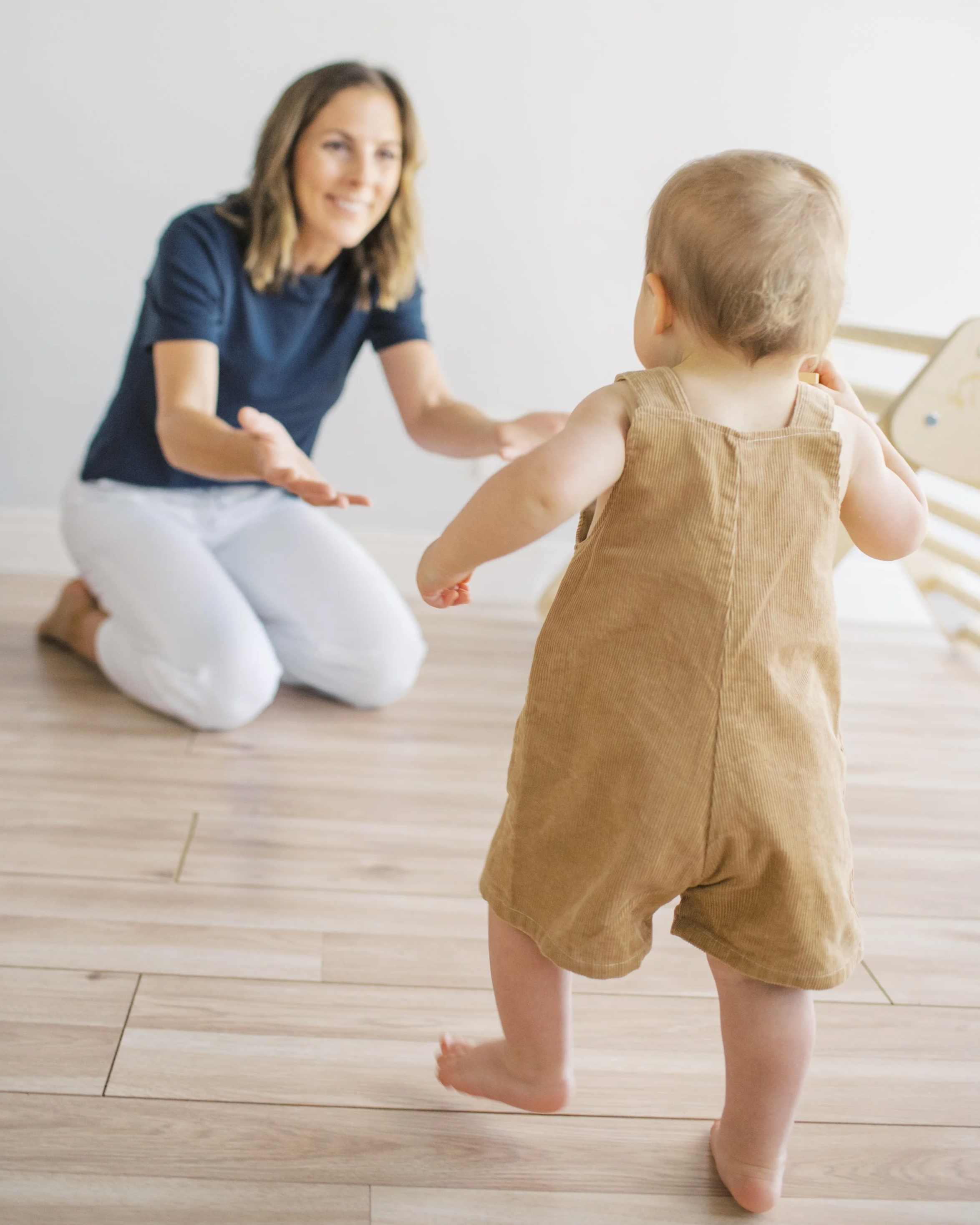
Baby Boden taking his first tentative steps toward Dr. Nicole, developing balance and coordination
