
Updated November 2026 · Written and reviewed by Dr. Nicole Crippen Schremp, PT, DPT, PCS, Board-Certified Pediatric Clinical Specialist
The short answer: Yes, there is pediatric physical therapy for babies in Denver, and in Colorado you don’t need a referral to start. A pediatric PT can help if your baby always turns their head one way, struggles with tummy time, or is slow to roll, sit, crawl or walk. Movevery sees babies at home across the Denver metro, at our Denver Village clinic, and virtually.
If you’ve found yourself searching “physical therapy for babies near me,” you’re already doing something wonderful for your little one: paying attention. Maybe your baby tilts their head the same way every time, hates tummy time, or just doesn’t seem to be moving the way other babies their age are. Trust that instinct. Early movement patterns are the foundation for everything that comes later, and small course corrections in the first year are far easier than catching up down the road.
I’m Dr. Nicole Crippen Schremp, PT, DPT, PCS, a board-certified pediatric physical therapist and owner of Movevery, serving families across the Denver metro with in-home visits, clinic sessions at The Denver Village, and telehealth. Here is what babies are learning to do month by month, the signs that are worth a closer look, and when it makes sense to bring in a pediatric PT.
Most of a baby’s earliest development organizes around one thing: the midline, or the center of the body. In the first months of life, babies gradually learn to bring their head to center, draw their hands together, bring a hand to the mouth, follow a toy as it crosses the middle, and move with both sides of the body working together. How easily a baby finds that center is one of the first things we look at.
Signs that are worth a conversation with a PT: a consistent head turn or tilt to one side • a flat spot developing on the head • strong resistance to tummy time or difficulty lifting the head • not bringing hands together at the middle by 3–4 months • rolling, reaching, or looking easily to one side only. You don’t need to wait for a diagnosis to reach out.

Tummy time is where a lot of a baby’s early head control and shoulder strength gets built, and it’s one of the first things we look at in an infant physical therapy evaluation.
Why the First Year Matters So Much
Babies don’t learn to walk out of nowhere. Every milestone is built on the one before it: head control makes rolling possible, rolling builds the core strength for sitting, sitting frees the hands and prepares the hips for crawling, and crawling organizes the trunk and hips for standing and walking.
When one of those building blocks is missing, babies are remarkably clever at finding a workaround. But those workarounds, like a strong side preference, W-sitting, or bunny-hopping instead of crawling, can quietly reinforce themselves and make the next skill harder. The good news is that when these patterns are caught early, they are usually very responsive to the right support. That is the heart of what pediatric physical therapy does.
What We Look for in an Evaluation
Every baby is different, but these are the patterns we pay close attention to:
Head position and preference. Does your baby always turn their head to the same side, or rest it tilted toward one shoulder? A consistent preference is one of the most common early signs of torticollis.
Coming to midline. Can your baby bring both hands together in the center, find their hands, and bring a hand to their mouth? Do they turn their head fully in both directions with equal ease?
Crossing midline. As they grow, can your baby follow a toy with their eyes as it moves across the center of their body, and reach across to the other side? Difficulty crossing midline can point to an underlying asymmetry.
Head shape. We look for flattening on the back or one side of the head, which often develops alongside a head-turning preference.
Symmetry in movement. When your baby kicks, reaches, and rolls, do both sides of the body participate equally? We watch for a baby who rolls easily to one side but not the other, or favors one hand very early.
Tummy time tolerance. How your baby tolerates and moves during tummy time tells us a lot about neck strength, comfort, and symmetry.
We are not looking for perfect symmetry. Some asymmetry is completely normal in a growing baby. What we want to know is whether both sides of the body are available:
Can they turn their head in both directions?
Can they bring their hands toward the center of their chest?
Can they return their head toward the middle on their own?
Can they organize their body without always extending, rotating, or working harder to one side to compensate?
The pattern matters more than any single moment. An occasional preference is normal. A consistent one may be your baby’s way of telling us something.

Propping evenly on both forearms with the head in the middle is one of the things we look for in a baby physical therapy evaluation.
What to Look for, Month by Month
Every baby develops on their own timeline, and this is not a diagnosis. It is a guide to help you know what is typical and what is worth a conversation.
Birth to About 3 Months
Brings hands toward the middle of their body and (by around 3 months) can hold their head steadier in the middle
Starts lifting the head during tummy time
Follows your face and sounds to both sides
Worth checking in if: your baby always turns their head to the same side, strongly resists turning one direction, is developing a flat spot on the head, or really can’t tolerate any tummy time. A consistent head turn can be an early sign of torticollis, one of the most common and most treatable things I see.

Hands finding the feet at the middle is a sign a baby is organizing around their center, and it usually shows up around four months.
4 to 6 Months
Holds the head steady and in midline; pushes up on forearms, then hands, in tummy time
Reaches for toys, brings hands and feet to the mouth
Begins rolling, first to the side, then over
Worth checking in if: your baby only rolls or reaches to one side, can’t prop on their hands, feels very stiff or very floppy, or isn’t bringing their hands together at the middle.
6 to 9 Months
Sits independently and uses the hands freely to play
Moves in and out of sitting; may start to crawl
Bears weight through the arms and shifts weight to reach
Worth checking in if: your baby isn’t sitting on their own by around 9 months, can only sit one way (or only W-sits), scoots or bunny-hops both legs together instead of crawling reciprocally, or can’t bear weight on their arms during tummy time.
9 to 12 Months
Pulls to stand and cruises along furniture
Climbs, squats to play, and lowers to the floor with control
Takes supported steps, then independent ones
Worth checking in if: your baby isn’t pulling to stand or cruising, only cruises or steps in one direction, stays persistently up on their toes or stiff through the legs, or strongly favors one side when moving.
Signs That Are Worth a Look at Any Age
A few patterns are worth attention no matter your baby’s age:
Asymmetry: always turning, reaching, rolling, or looking to the same side
A flat spot or head-shape change: often tied to a head-turn preference
Stiffness or floppiness: a baby who feels tight and hard to move, or soft and hard to support
Strong reliance on a compensation: W-sitting, bunny-hopping, or skipping a stage entirely
Feeding or latch struggles paired with movement concerns
Noticing one of these doesn’t mean something is wrong. It means it is a good moment to check in with a professional who can tell you whether it is within the range of normal or worth supporting.
How Early Movement Builds, and Why It Matters
Understanding the typical arc helps explain why we watch midline so closely in the early months.
A newborn is flexor-dominant: arms and legs tucked in, movement mostly random and controlled by gravity rather than by the baby. The head and neck extensors are the very first muscles to work against gravity, which is why early head control is the foundation everything else is built on. In these first weeks, a baby in tummy time should be able to turn the head to both sides to clear their airway.
Around two months, babies begin lifting and steadying the head and spending more time with it centered. By three to four months, the big midline skills come online: bringing both hands together in the center, hands to the mouth, propping on the forearms in tummy time with the head centered, and tracking a toy as it crosses the middle.
This early window is exactly where torticollis tends to reveal itself. When a baby strongly prefers one direction and does not center the head, you often see it first as a consistent head turn or tilt, a flattening on one side of the head, or a baby who rolls or reaches more easily to one side than the other. Catching that pattern early, while these foundational skills are still forming, is what makes gentle intervention so effective.
Why Early Matters, Especially for Torticollis
With torticollis and head-shape concerns, earlier is almost always easier. Gentle, consistent physical therapy in the first few months, paired with simple positioning changes you can do at home, often resolves these concerns without more involved intervention later. For head-shape concerns in particular, I love seeing babies in the first 2–3 months of life. The earlier we start, the more we can often resolve naturally, frequently without a helmet.
The 2024 Clinical Practice Guidelines for Congenital Muscular Torticollis from the American Physical Therapy Association are clear: all newborns should be screened for torticollis within the first 2 to 3 days of life, and physical therapy is recommended as the first-line treatment. The guidelines emphasize that early identification leads to earlier support, and earlier support leads to significantly better outcomes.
The timing of treatment matters:
PT started before 1 month: treatment typically lasts 6 to 8 weeks with excellent outcomes
PT started between 1 and 3 months: treatment typically lasts 3 to 6 months
PT started after 6 months: treatment can take 9 to 10 months or longer, with a smaller percentage of babies achieving full resolution
If your baby has been diagnosed with torticollis or you’ve noticed a head-turning preference, our complete guide to infant torticollis walks through the signs, causes, and what tear-free treatment looks like at Movevery.
You do not need to wait and see, and you do not need a referral in Colorado to get started. There is no milestone you have to “fail” first to qualify for help. If your gut says something feels off, that is reason enough for an evaluation.
What a Movevery Evaluation Actually Looks Like
If you have noticed that your baby consistently looks one direction, struggles to bring their hands to center, feeds very differently on one side than the other, or just seems most comfortable in one pattern, it is worth a closer look. You are the expert in your baby, and the small things you notice are often our best clues.
A position like the guppy hold can be a useful tool, but doing one position on repeat is not an assessment. Before we give you a home plan, we want to understand what your baby is actually showing us: their movement patterns, muscle tone, feeding, head shape, birth history, and nervous-system regulation, and where their body has easy options versus where it is working harder. Then the home program can match the baby in front of us instead of following a generic routine.
We also pay attention to how symmetry and midline challenges can show up in unexpected ways. Difficulty with midline or persistent asymmetry can sometimes tie into reflux, colic, and discomfort that parents have been managing without knowing movement was part of the picture.
At Movevery, we believe in getting the right people around your family when it is helpful. If feeding or latch concerns come up alongside movement patterns, we may point you toward lactation support. We love the team at The Milk Academy. If we think chiropractic care could help, we may recommend Belly Bliss, who specialize in gentle care for infants and newborns. Every family is different, and we meet you where you are.
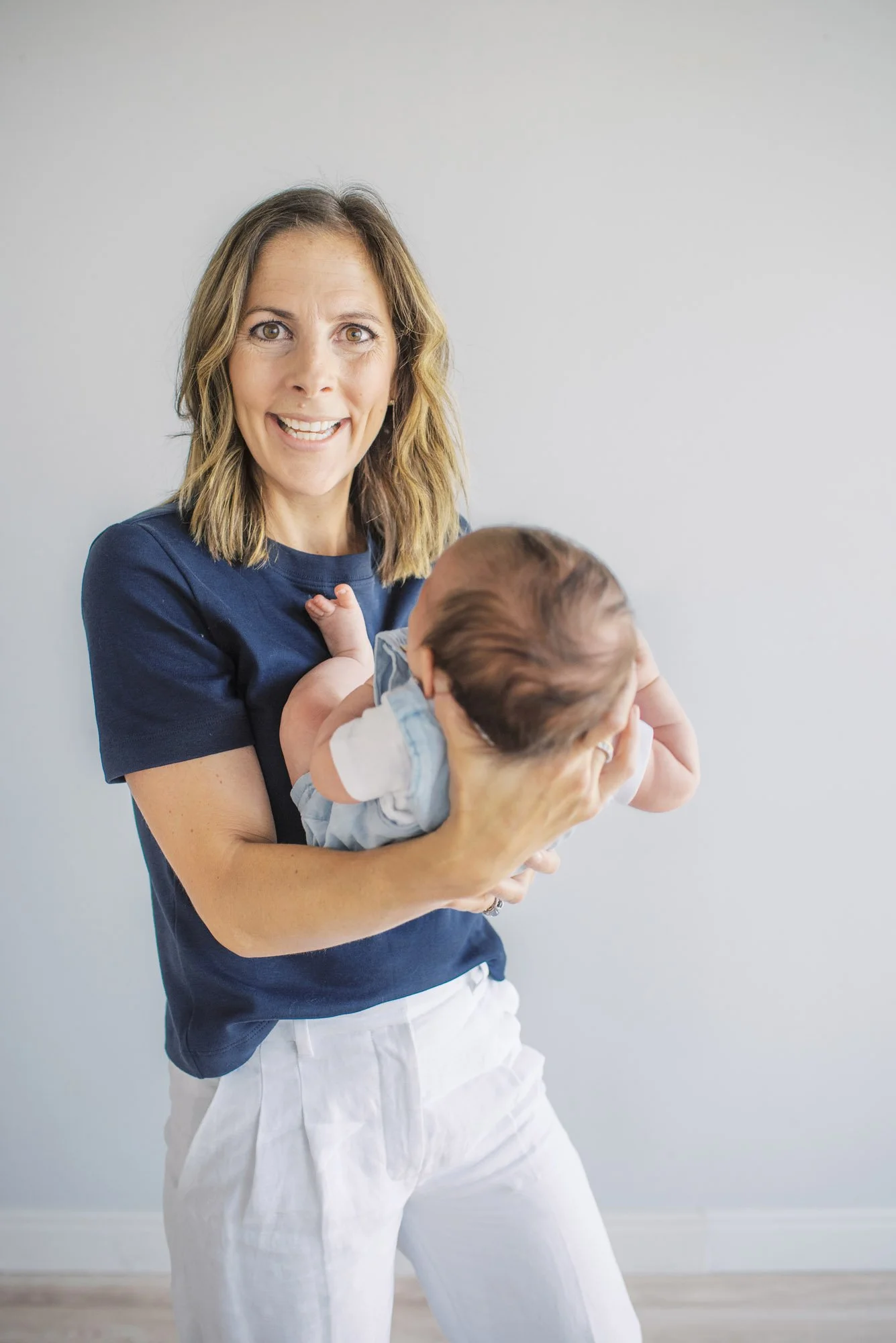
Dr. Nicole Schremp, PT, DPT, PCS, owner of Movevery and a board-certified pediatric physical therapist serving babies across the Denver metro.
Looking for Baby Physical Therapy Near You in Denver?
At Movevery, I work with babies and toddlers (birth to 3, with a special focus on the birth-to-18-month window) on torticollis, head flattening, tummy time, and milestone and movement concerns. I come to you with in-home visits across the Denver area, see families at the Movevery clinic at The Denver Village, and offer telehealth for parents who want expert eyes and a plan without the drive.
No referral is needed in Colorado, and visits are HSA/FSA eligible. If you have been searching for physical therapy for babies near you, I would love to help your little one move and your family feel confident.
Ready to get eyes on your little one? Book an evaluation with Movevery. I will come to you.
Frequently Asked Questions
Is there physical therapy for babies near me in Denver?
Yes. Movevery provides in-home physical therapy for babies throughout the Denver metro, plus clinic visits at The Denver Village, with a focus on torticollis, head shape, and motor milestones. Telehealth is available across Colorado.
At what age can a baby start physical therapy?
From birth. Newborns and young infants are often the ideal time to start, especially for head-shape and torticollis concerns, when early support can make the biggest difference.
What is “midline” and why does it matter for my baby?
Midline is the center line of the body. Learning to bring the hands, eyes, and head to the center is a key part of healthy early development. A baby who stays turned to one side and does not come to midline may be showing an early sign of torticollis.
At what age should my baby start physical therapy for torticollis?
As early as you notice a head-turning preference, tilt, or flat spot. Early, gentle care in the first few months is usually the easiest and most effective time to help. The clinical guidelines recommend screening in the first 2–3 days of life, with PT support in the first 2–3 months for the best outcomes.
Do I need a referral for infant physical therapy in Colorado?
No. Colorado has direct access, so you can book an evaluation with Movevery without a physician referral. Some insurance plans may require one, but reach out and I will help you figure out the simplest path.
What happens at a first pediatric PT visit?
I watch how your baby moves and plays, check head shape, strength, symmetry, and milestones, answer your questions, and send you home with a simple plan you can actually do between visits.
Is physical therapy for babies covered by insurance?
Movevery is an out-of-network, cash-pay practice. We provide a detailed superbill you can submit for possible reimbursement, and visits are HSA/FSA eligible.
Does Movevery come to my home?
Yes. I offer in-home visits across the Denver metro, clinic visits at The Denver Village, and telehealth across Colorado.
What does tummy time have to do with physical therapy?
Tummy time is one of the most important things a baby does in the first months of life. It builds the neck, shoulder, and core strength that make rolling, sitting, and crawling possible. When a baby strongly resists tummy time, can only prop on one side, or can’t lift the head, that is often the first place we see a movement concern worth addressing. It is also where we catch early signs of torticollis and head-shape changes before they become harder to shift.
