
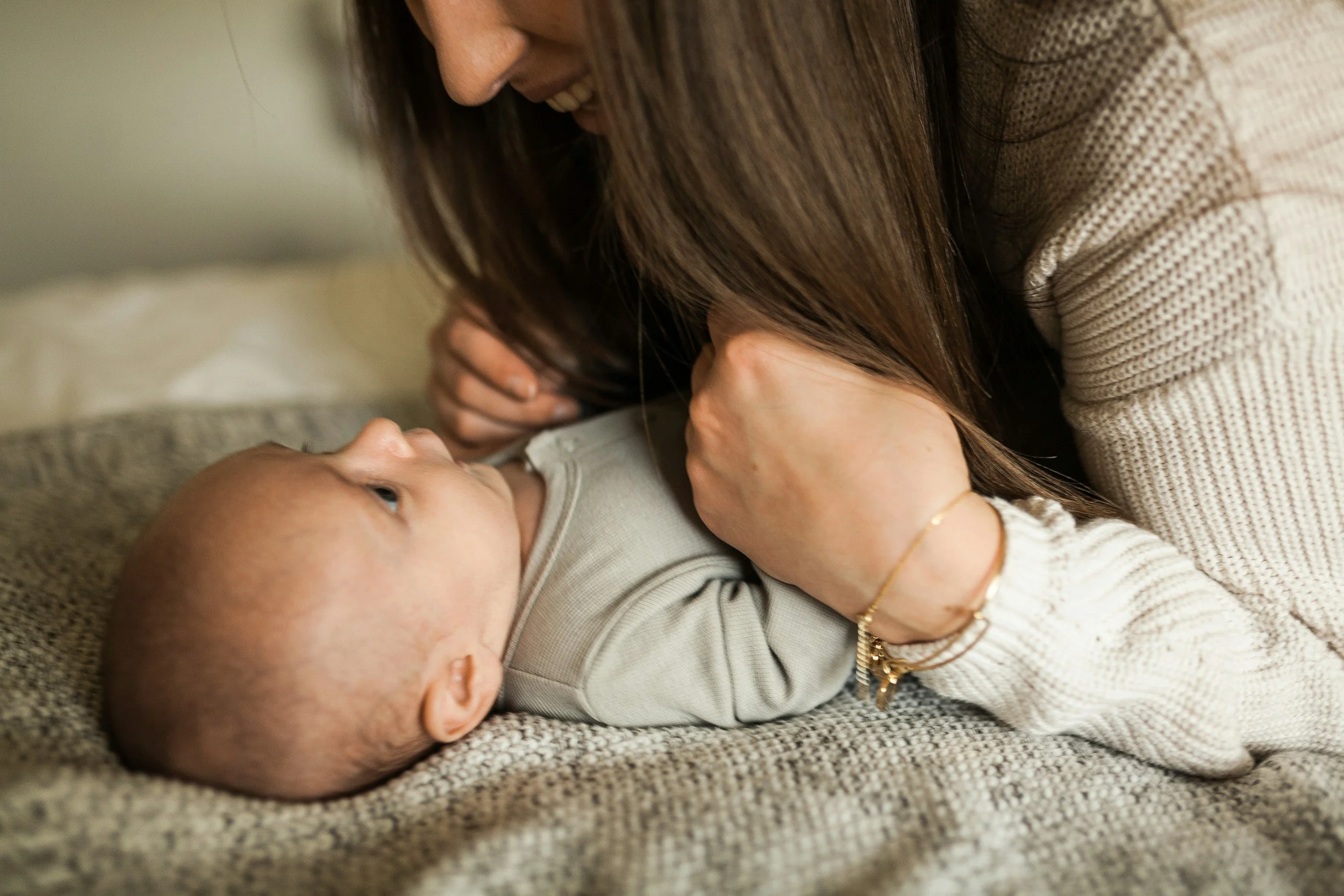
Updated November 2026 · Written and reviewed by Dr. Nicole Crippen Schremp, PT, DPT, PCS, Board-Certified Pediatric Clinical Specialist
The short answer: Snuggles & Milestones is a six-week movement class for babies 0–6 months and their caregivers, taught by pediatric physical therapist Dr. Nicole Crippen Schremp at Baby University in Aurora. Parents learn to read their baby’s cues and support tummy time, rolling and early motor skills through guided floor play.
The early months of parenthood are full of contradiction. They are tender and exhausting, joyful and disorienting, all at once. You are learning your baby's language while navigating your own transformation. And somewhere in the middle of feeding schedules and sleepless nights, most of us are quietly looking for the same thing: a place to slow down, feel supported, and find our people.
Baby University in Aurora is that kind of place. Movevery is thrilled to be partnering with Baby University to bring Snuggles & Milestones to their space at 10255 E. 25th Ave., Aurora, CO 80010. Baby University was built with exactly this season of life in mind, a whole-family environment where you can take a class, explore the indoor playground, and linger in the lounge with a coffee while your baby plays nearby. It is the kind of place that slows everything down just enough to let you actually be present in it.
What Is Snuggles & Milestones?
Snuggles & Milestones is a 6-week infant movement class series in Aurora, CO, led by Dr. Nicole Schremp, infant & pediatric physical therapist and founder of Movevery. The class is designed for babies 0–6 months and their caregivers, meeting once a week for six weeks.
The class is grounded in two ideas that work together. The first is learning to read your baby's body: noticing their unique cues and recognizing common patterns like head preference, mild tightness, or asymmetry, then knowing the simple, comforting adjustments that keep baby relaxed and progressing. The second is moving with intention: floor time, purposeful play, and guided positioning that naturally support your baby's developing strength, balance, and motor coordination, building the foundation for early milestones and, most importantly, their growing participation in everyday life.
When you understand what your baby is showing you, and you know how to respond, everything shifts. Play becomes intentional. Touch becomes communication. Tummy time becomes something you both feel good about.
Each week begins the same way, a gentle infant massage and rhythmic movement warm-up that creates predictability for your baby and presence for you. This consistent anchor builds the kind of attunement that helps your baby feel safe enough to explore, and helps you grow in confidence with every repetition.
What will my baby and I learn?
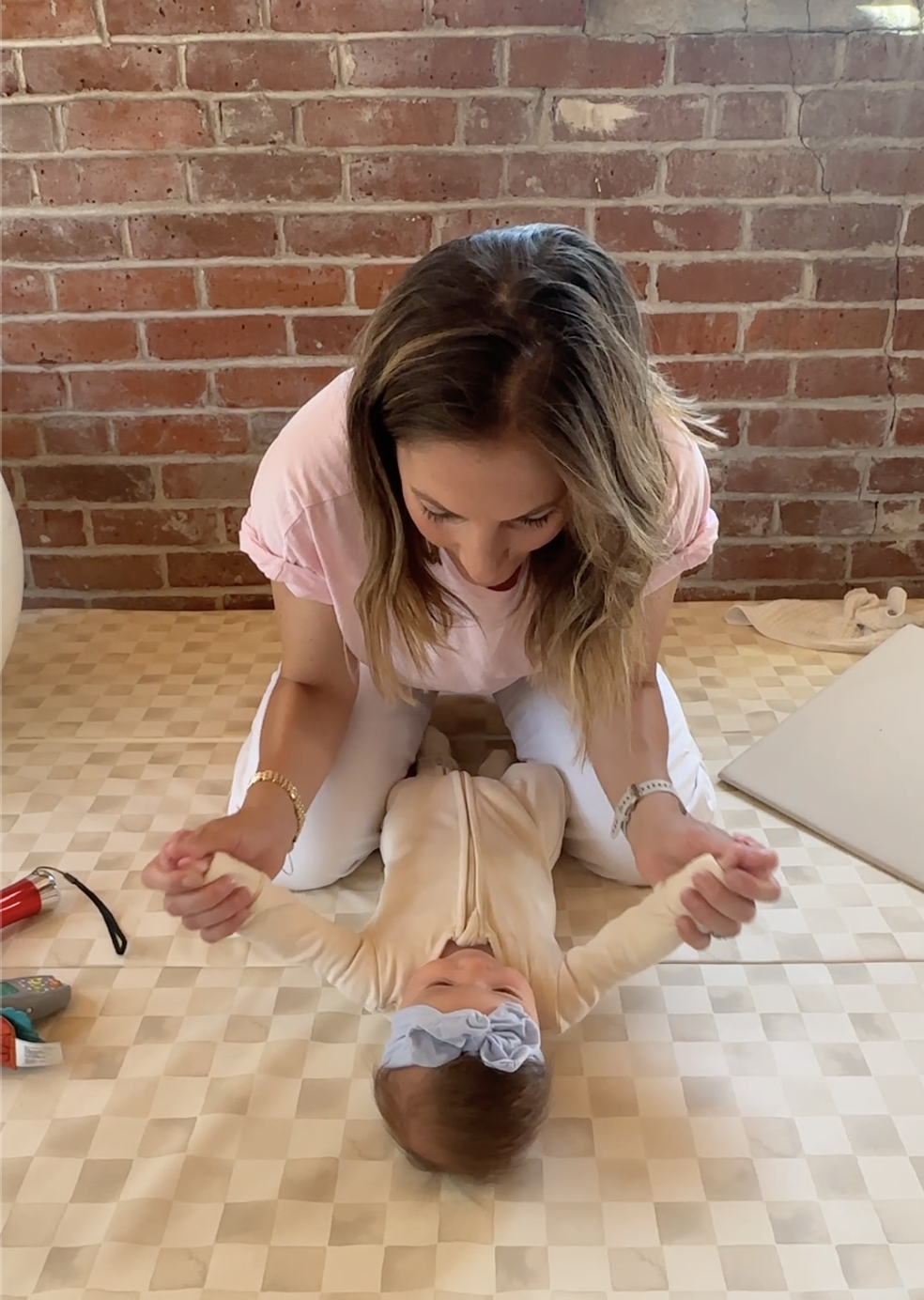
Over six weeks, Snuggles & Milestones moves through the foundational layers of early infant development:
Weeks 1 and 2 introduce infant massage, permission-based touch, and fascia, the connective tissue system that can influence how your baby feeds, sleeps, and holds their head. You will learn to recognize early patterns like head preference, mild tightness, or asymmetry, and understand simple, comforting ways to support them.
Week 3 focuses on tummy time and movement, including how to read your baby's cues, recognize when they have had enough, and adjust positions to keep the experience comfortable and productive. This is baby-led movement at its core: responsive, observant, and grounded in your baby's pace.
Week 4 covers transitions and purposeful play, the spinal rotation and weight shifting that quietly build the foundation for every milestone to come.
Week 5 explores how babies naturally build toward sitting through self-initiated transitions, core strength, and midline reaching, and what caregivers can do to support that process along the way.
Week 6 brings it all together with a developmentally rich look at everyday life: thoughtful use of containers like bouncers and swings, babywearing tips for alignment and connection, and how to recognize early red flags like persistent asymmetry or discomfort. There is time for questions, reflection, and celebrating how far you and your baby have come together.
Everything you learn is designed to carry into daily life, using the toys you already have and the movements you can offer during an ordinary afternoon at home.
Why Community in the First Six Months Supports Your Baby's Development
One of the things we know from both research and experience is that parents who feel supported raise children who feel secure. The relationships you build in this season matter, for you and for your baby.
Baby University was built around this understanding. Their trusted network of specialists, their lounge, their small class sizes, all of it creates a space where families feel held rather than hurried. Snuggles & Milestones fits naturally into that vision. Groups are kept intentionally small so that every family receives personalized attention from a pediatric PT, and there is always room for your specific questions.
You will leave each class with practical tools and having spent 45 minutes alongside other parents who are in the same tender, growing, figure-it-out-as-you-go season. That matters more than most of us give it credit for.
When is the next Snuggles & Milestones class?
Snuggles & Milestones ran in summer 2026 at Baby University in Aurora, and new sessions are coming in 2027. Classes are for babies 0–6 months and their caregivers, meet once a week for six weeks, and stay small so every family gets real support. To be the first to hear the new dates, join the Every Little Body newsletter on our home page.
